
Wahl Replacement Blades: Fit, Families and When to Replace
Most blade orders that go wrong go wrong on fit, not on quality. Wahl builds clippers in families that take completely different parts, and a blade that physically mounts to your machine can still be the wrong blade for it. Before ordering anything, the question to answer is which family your clipper belongs to - everything else follows from that.
Compare the Full Lineup
Two families, two kinds of blade
Adjustable-taper clippers have a lever on the side that opens and closes the blade, changing the cut length without swapping parts. The blade is bolted on and is replaced as a matched set of cutter and still blade. Most home clippers and many barber clippers work this way.
Detachable-blade clippers take blades that snap off and on, each blade a fixed size, changed by hand between cuts. This is the standard in animal grooming and in some professional human-hair machines.
The two systems are not interchangeable in either direction. If you can pop the blade off with your thumb without tools, you have a detachable machine; if changing the blade means a screwdriver, you have a taper clipper.
The 5-in-1 adjustable blade
Wahl's 5-in-1 blade is a detachable blade with its own lever, giving several cut lengths from a single part. It appears across a range of machines, and it is a genuinely convenient system - one blade covering what would otherwise be several.
The catch is that it only fits clippers built for it. A 5-in-1 blade will not serve a standard taper clipper, and a standard detachable blade will not give you the adjustment. Check that your model is described as 5-in-1 before ordering the blade, because the two look broadly similar in photographs.
On Wahl's cordless dog clippers, this is the blade behind Bravura and Arco, and the comb attachments that clip onto it are not the same as a bundled kit's guide combs - see what's actually in a Wahl dog grooming kit before assuming the parts interchange.
Popular options on Amazon
Prices change often - check the current price on Amazon.


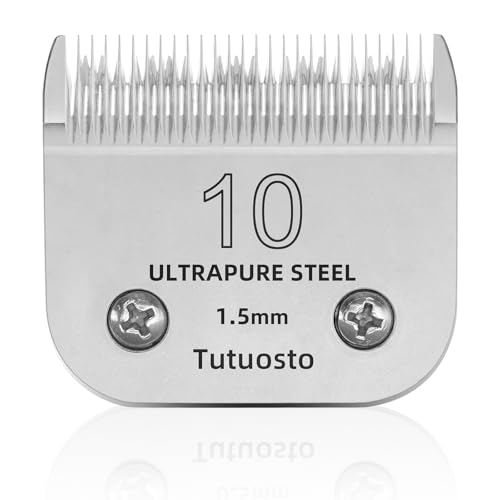
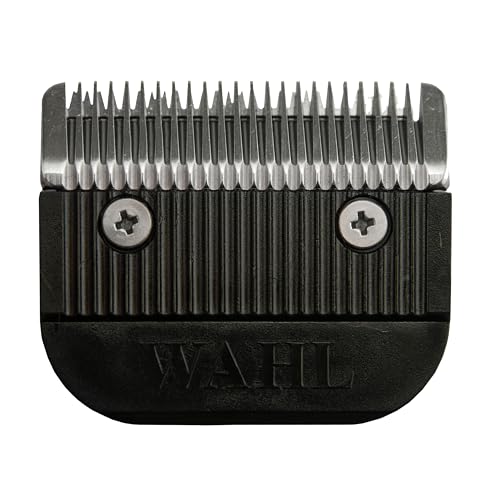


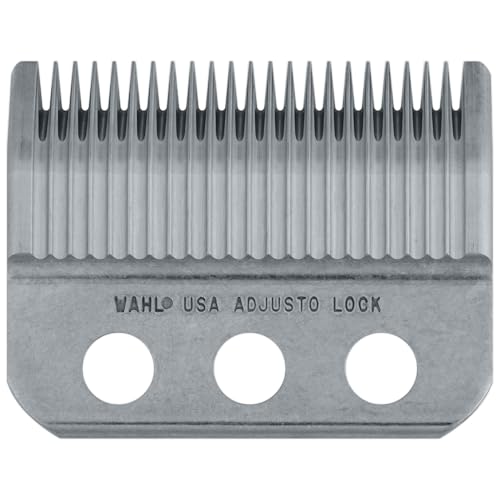
Common Wahl replacement blades by clipper type
The fastest way to order the wrong blade is to go by the name of the clipper alone. Match on how the blade mounts and on the number etched into the blade you are taking off. The table below groups the blades you will actually see on Amazon by the way they attach.
| Blade type | How it mounts | Common example | Typically fits |
|---|---|---|---|
| 2-hole standard | Two screws | Model 1005 (2-hole) | Many full-size taper clippers |
| 3-hole standard | Three screws | Model 1045 set / 1005 (3-hole) | Other full-size taper clippers - count the holes first |
| Stagger-tooth | Two screws, offset teeth | Model 2161 | Magic Clip and similar, for a softer blended finish |
| 5-in-1 adjustable | Detachable, own lever | 2179-301 | Machines described as "5-in-1" |
| T-blade / T-wide | Model-dependent | 2215-type T-wide | Detailer and T-shaped trimmers |
Two checks settle most orders: count the screw holes on the current blade, and read the number stamped on the blade itself rather than trusting the box. For the full model-to-blade matrix across Wahl's clipper range, see the clipper models guide.
Two of these have model-specific guides worth reading before you order: the Magic Clip stagger-tooth blade (2161) and the Detailer wide T-blade (2215).
A dedicated head-shaving machine is a different case again - see the Wahl balding blade guide for the 6X0 ultra-close 2105 and how it differs from a taper blade.
The Senior is the one machine in this range without a single number in the table above - it has been rebuilt more than once and each version shipped its own blade. See the Wahl Senior blade guide for how to read the number stamped on yours before ordering.
Wahl's animal clippers sit outside this table entirely: the corded KM range takes snap-on detachable A5 dog-clipper blades numbered by cut length (10, 7F, 5F) rather than by screw pattern, and when one of those stops cutting the cause is usually coat and heat, not the blade - see dog clippers not cutting.
The clipper itself, not just the blade, varies across that animal range too - see Wahl dog clipper models compared for which one to buy.
Replacing a screw-on blade, step by step
Swapping a bolted-on taper blade takes a couple of minutes and one small screwdriver. The order matters more than the speed:
- Note the alignment first. Before undoing anything, look at how the cutter sits against the still blade - the cutter tips should sit slightly back from the still-blade tips. You are copying this on the way back.
- Remove the screws. Two or three depending on the blade. Keep them - replacement blades do not always ship with new ones.
- Lift the old blade off and brush the hair and old oil out of the housing before the new one goes on.
- Seat the new blade and start both screws before tightening either, so the blade can still shift into square.
- Set the alignment to match what you noted, tighten evenly, then add a few drops of oil and run the clipper for a few seconds.
Detachable and 5-in-1 blades skip all of this - they pop off and on by hand, which is the whole point of the system.
If the cutter ends up sitting crooked or the fresh blade cuts unevenly, the full technique for getting it square is on our Wahl blade alignment guide.
Original or third-party
Third-party blades sold as compatible are common, considerably cheaper, and vary. Some are perfectly good; some are ground slightly off, which shows up as pulling on one side or a blade that heats faster than it should.
For an everyday home clipper the risk is small and the saving is real. For a machine you rely on, an original blade removes a variable - and if a third-party blade cuts badly, you will spend longer diagnosing it than the difference in price was worth.
Watch for listings that claim compatibility with several brands at once. Those are usually made to a common mounting pattern, which is not the same as being made for your clipper.
When a blade is actually finished
Blades get replaced far earlier than they need to be, because the symptoms of a dry or misaligned blade look identical to a dull one. Work through this order before buying:
- Oil it. A few drops across the teeth with the clipper running. A dry blade pulls, heats and gets loud, and oiling fixes it immediately.
- Clean it. Hair packed between cutter and still blade mimics dullness exactly.
- Check alignment. The cutter should sit slightly back from the tips of the still blade and be square across. Misalignment leaves lines and catches skin.
- Check tension. Too loose and the blade chatters; too tight and it drags and overheats.
If it still pulls after all four, the blade is done - or it needs professional sharpening, which is worth considering for an expensive detachable blade and rarely worth it for a cheap one.
If the blade is worn rather than damaged, sharpening can restore the edge instead of replacing it - see how to sharpen Wahl clipper blades for whether it is worth doing on your blade.
Buying blades in pairs
Anyone cutting regularly benefits from a second blade of the size they use most. Blades run hot in continuous use, and swapping to a cool one is how professionals avoid the burn complaints that come with a single blade doing an entire afternoon.
It also removes the situation where a blade fails mid-cut and there is no replacement in the house. That is the one scenario where paying for next-day delivery on a part costs more than the part.
Frequently Asked Questions
How do I know which blade fits my Wahl clipper?
Can I put a detachable blade on a taper clipper?
Are third-party Wahl-compatible blades any good?
How long should a clipper blade last?
Is WD-40 good for Wahl clipper blades?
Do all Wahl blades fit all Wahl clippers?
Can Wahl clipper blades be sharpened instead of replaced?
Ready to check the latest price?
Check Replacement Blades on Amazon