
Dog Clipper Blades for Wahl: Sizes and Fit
Wahl's corded KM clippers (KM2, KM5, KM10) take snap-on A5 detachable blades sized by cut length, not by guard number: a #10 leaves about 1/16 inch (1.5 mm) for most body work, a #7F or skip-tooth clears thick and matted coats, and higher numbers cut closer. The same A5 blades fit Andis and Oster A5 clippers.
Animal blades use their own numbering that catches out anyone coming from a human clipper, where the higher number cuts shorter and the blades snap on and off instead of bolting in. This guide maps the A5 sizes to real cut lengths, explains the full-tooth versus skip-tooth split that decides whether you get through a matted coat, and covers what fits what.
The A5 detachable blade system
Wahl's corded animal clippers - the KM2, KM5 and KM10 and the Storm and Rapid Fire machines - use the A5 snap-on blade, the same mount Andis and Oster built their professional clippers around. One lever releases the blade and the next size clips straight on, which is why groomers change cut length by swapping blades rather than by fitting guards. A5 blades are cross-compatible across all three brands, so a Wahl #10, an Andis #10 and an Oster #10 interchange on any A5 clipper.
The one thing to get right before buying: this is a different system from Wahl's cordless grooming clippers. The Bravura, Arco, Chromado and Figura use a 5-in-1 fine adjustable blade that slides through five lengths with a lever, and A5 blades do not fit them. If your clipper changes length with a lever on the side rather than by snapping the whole blade off, you need 5-in-1 blades, not A5. Human Wahl clippers are different again - see Wahl replacement blades for those.
Starting from scratch rather than replacing a worn blade? The dog clipper models guide compares the KM range against Wahl's cordless options, and the grooming kit guide explains what a bundled starter kit includes versus buying the clipper and blade separately.
A5 blade sizes and what they leave
On an animal blade the number is the length of coat left behind, and a higher number cuts shorter - the opposite of a human clipper guard. The letter after it matters as much as the number, which the next section covers.
| Blade | Leaves | Metric | Typical use |
|---|---|---|---|
| #40 | 1/100" | ~0.25 mm | Surgical prep, pads, very close |
| #30 | 1/50" | ~0.5 mm | Close work, under guard combs |
| #15 | 1/80"... 3/64" | ~1.2 mm | Short body clip, pads and face |
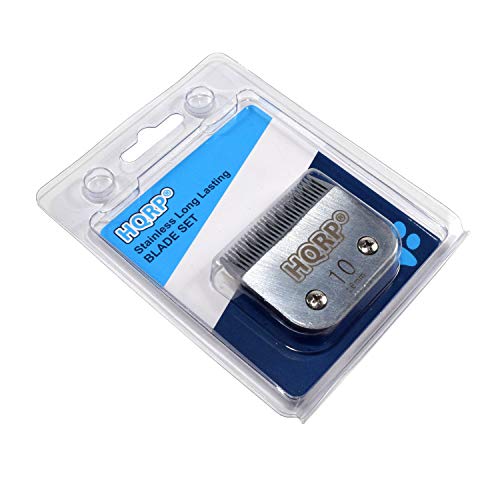
| #10 | 1/16" | ~1.5 mm | The everyday blade - bellies, sanitary, close body |
| #8.5 | 1/8" | ~2.8 mm | A touch longer than #10 for body work |
| #7F | 1/8" | ~3.2 mm | Full-body pet clip, forgiving length |
| #5F | 1/4" | ~6.3 mm | Leaving more coat, fuller finish |
| #4F | 3/8" | ~9.5 mm | Longer body clip |
The #10 is the blade to own first: it handles bellies, sanitary trims and close body work on most dogs, and guard combs clip over it to add length. From there, add a longer F blade for the finish you want and a coarse blade for coats that mat.
Popular options on Amazon
Prices change often - check the current price on Amazon.

Full tooth (F) versus skip tooth
The letter on an A5 blade is not decoration. An F blade is full-tooth, or finish: the teeth are set close together and it leaves a smooth, even coat - what you want for the final pass and for short, neat clips. A blade without the F is skip-tooth: every other tooth is shorter, so the gaps are wider and the blade takes a bigger, coarser bite.
That difference is exactly what decides whether you get through a thick or matted coat. A skip-tooth blade powers through density that packs and stalls a fine finishing blade, which is why it is the blade to reach for first on a neglected or double coat, then follow with an F blade to finish. Running a fine F blade into heavy mats is the single most common reason a dog clipper stops cutting - it is not broken, it is the wrong tooth pattern for the job.
Steel, ceramic and blade heat
Most A5 blades are all-steel, and they work fine, but on long grooms heat is the enemy - friction warms the blade until it stops cutting cleanly and can catch skin. Ceramic-edged blades (a ceramic cutter over a steel base) run noticeably cooler for the same work, which is why groomers doing back-to-back dogs favour them. If a blade is heating up on you, that is a heat-management problem, not necessarily a dull blade - the not-cutting guide covers cooling it mid-groom.
Genuine Wahl, Andis and Oster A5 blades hold an edge longer than unbranded ones, which matters because an animal blade meets far more grit than a human clipper blade. Compatible blades from established makers are a reasonable saving on sizes you use occasionally; for the #10 you reach for every groom, a genuine blade earns its price.
Keeping A5 blades cutting
A5 blades cut for years if you look after them, and neglect kills them fast. The routine is short:
- Brush and oil during the groom, not just after - a few drops of oil across the teeth with the clipper running, several times on a heavy coat.
- Clear the socket when you swap blades - hair packed in the mount makes the next blade sit crooked and cut unevenly.
- Dry blades after any wash or dip to stop rust pitting the teeth.
- Sharpen the good blades a few times before retiring them; replace cheap ones outright.
Because the blades are detachable, keeping your common sizes in pairs means a dull or hot edge never ends a groom - you snap on the spare and carry on.
Frequently Asked Questions
What blade size should I use on my dog?
Do Wahl KM dog clipper blades fit Andis and Oster?
What is the difference between a #10 and a #10 skip-tooth blade?
Why do higher-numbered dog blades cut shorter?
Are ceramic dog clipper blades better than steel?
Ready to check the latest price?
Check genuine Wahl animal blades on Amazon